
SUCCESS DISEASE
A common spiritual malady, for individuals and church bodies, but there is a cure

SUCCESS
A few decades ago, a medium sized church experienced a revival which spawned a nationwide campaign and drew visitors from around the globe. Churches made pilgrimages to this church in what I disparagingly call “revival tourism.” Prophecies predicted this revival would bring revival to all of America.
Sadly, what got them to this point did not keep them there.
Today, this church is in debt and has a few hundred members. I mention this church only to point out the illusive and often ephemeral nature of success.
Being successful is not being shatterproof. If the Lord blesses us, we ought not assume we are special, invincible, or even the cause of the blessing.
Every gain requires recalibration. Fruitfulness is not arrival; it is preparation for the subsequent adventure. What does God have for us next?
In military parlance, a planned follow-on mission is called a “sequel.” What a winsome way of putting it… success is only a prequel to something greater.
The Japanese, and most likely the Germans, suffered “success disease” during World War II. They met with victory after victory and were confident in their war machines.
Studying the war, one finds the seeds of the Axis powers’ defeat relatively early in the conflict; Japan at the Battle of Midway, and Germany with the invasion of Russia. It took another four and a half years for the Allies to attain victory, but a brief period of success contributed to the fall of Germany and Japan.
How do we as believers and churches avoid and cure Success Disease?
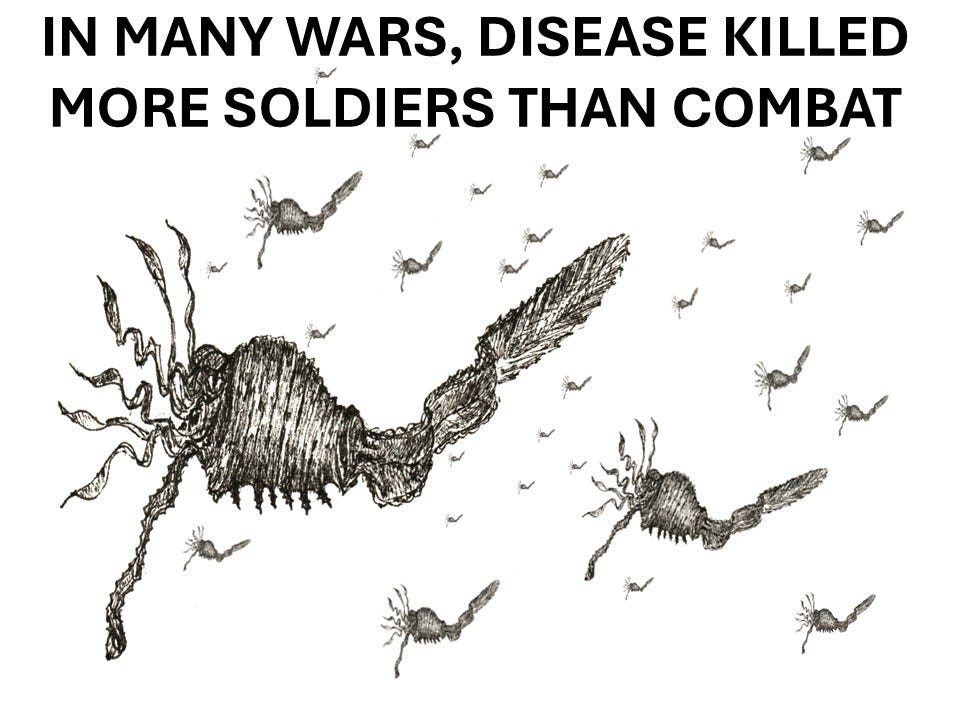
DISEASE CAN BECOME AN EPIDEMIC IF IT IS NOT INOCULATED IMMEDIATELY.

INNOCULATION IS EASIER THAN CURING
First, we must have a biblical motive for success. Do we want to the esteem of others which comes with visible holiness? Do we want a bigger church and a consequent larger budget? None of these are true success. We must fear God and keep His commandments (Ecclesiastes 12:13) and seek first the Kingdom of God (Matthew 6:33).
This coincides with the metric of success. We must ensure the Bible defines success for us or our organizations. The next person you tell about Jesus may become the next Billy Graham. You may have been passed over for promotion, but perhaps it was because of your lack of complicity with your boss’ sketchy business practices.
Biblical metrics of accomplishment will enable us to avoid self-delusion.
This leads us to the method of success. Ensure the mechanism causing our accomplishments is biblical, intentional, sustainable and flexible. We must not attribute our success to a rhythm or a process, which, if repeated ad infinitum, will bring even greater success. What got us there may not keep us there.
When I worked in the chemical industry, we prized the process. A good product today created by a bad process could lead to bad product tomorrow. Cheating on taxes may give us some extra cash today, but the audit is coming….
If we are truly following the Bible and define triumph in biblical terms, we will be less prone to employ cheap or heretical approaches.
“Success is only a prequel to something greater”
The surest inoculation against success disease is an understanding of the miracle of success. Much of what I have written in this article sounds programmatic or formulaic. Good programs and formulae are not to be avoided, but we must always marvel that an all-knowing, all-powerful God condescends to use us to accomplish His mission. Dr. Elmer Towns referred to the concept of “blessability.” Towns did not understand why God would grant a harvest to Pentecostals, but He does.
A wise man once said, “If at first you do succeed, try to hide your astonishment.” Success must be an invitation to analyze what went well and what could be done better. It is not the time to break our arms in self-congratulation. Many Christians, finally gaining victory over a habit or an attitude, fall back into a persistent sin because they were carelessly overconfident in victory.
Humility is required when enjoying success. Having embraced a good methodology with the right motives, success can still be a mystery. I once thought I was a great chess player. A person challenged me to a match. He did not look like a chess player at all. He had the air of a flibbertigibbet and did not have the same grooming standards as Bobby Fischer. I learned quickly that one does not have to look intelligent to be a quintessential chess player.
When God blesses us, let us never gloat. We may simply have been His closest agent to a hurting soul, and God used us despite, not because of, our abilities.
The Apostle Paul reminds the church in Corinth of the Israelites’ struggles during the exodus from Egypt, then admonishes, “Wherefore let him that thinketh he standeth take heed lest he fall,” (1 Corinthians 10:12, KJV).
Celebrate victory. Feeling good about success can be an antidote against relapses. Celebrate victory but double your guard.
God can heal all our diseases; diseases in our attitudes and ideologies may be the hardest to heal.
When we arrive in God’s presence and hear, “Well done, thou good and faithful servant,” we will truly know “success.” When we arrive at the Bema Seat, we will know just how successful we were.
I pray we all have a successful week, year, and life.
Mark,
Your posts are poignant, challenging, thought provoking, and encouraging.
You have always had a gift for presenting potential pitfalls in such analogous ways. May we take heed! Grateful for the insight God gives you. Collate all and publish a devotional book.