
One Equals One

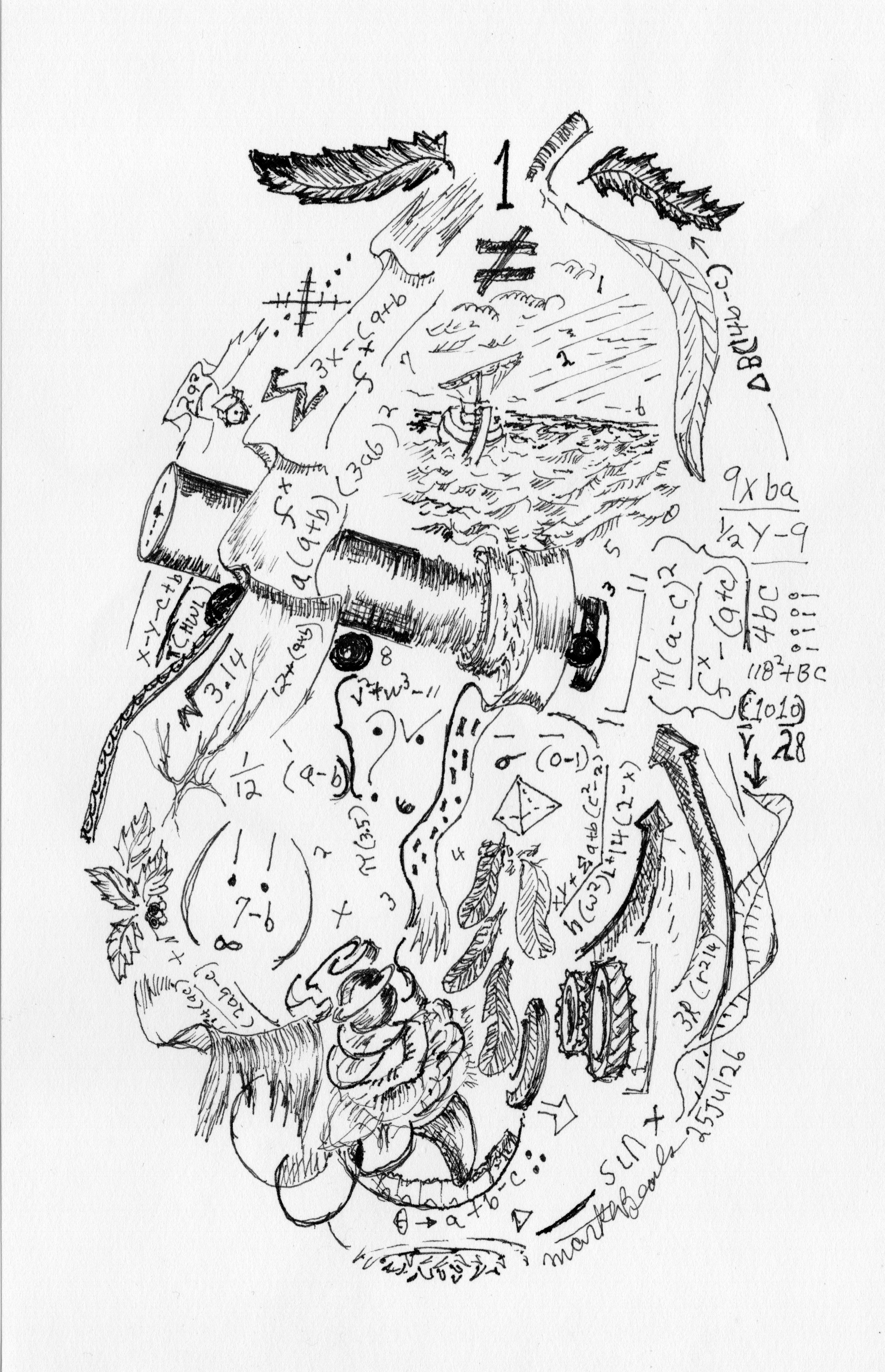
There I was, standing in the production office upstairs at my chemical plant awaiting a raw materials report. The production manager spotted my idleness and decided to impress me with a trick he had learned in college math.
“Did you know one is not equal to one?” he asked.
I shrugged, wanting to get back to work.
“I’ll prove it,” he added, grinning.
He then started an equation on the dry erase board. He quicky added an fx calculus and took his assertion into higher math. He attentively carried a two and threw in a multiple square roots. He confused himself a few times, started over once, and retraced his steps several times more.
Eventually he proved to me that one indeed does not equal one… and I got an hour of overtime.
Beware.
This experience became a parable to me. Scripture has much to say simply and directly. We need not be cryptanalysts or steganographic experts to understand the pillar doctrines of our Faith. Substack is flooded with writers who perpetuate subversive ideas regarding many long-established doctrinal truths. To do this, they often call for a softening of apostolic authority, an odd understanding of the Old Testament and an incongruent appeal to biblical languages.
I read where someone tossed out the works of Paul altogether and wrote (not implied) that New Testament writers based their theology on inadequate Old Testament thinking rather than on Christ.
The books of Enoch and Baruch may be valuable for historical purposes but let us not elevate their status to canonical. After two thousand years of Church history, I do not see the need to reassess ancient writings to determine if we ought to include them in the Received Text.
Regarding the Canon itself, many imply the Canon of Scripture was recognized in a Smoke-filled room. The church fathers acted like the mobsters Vito Corleone and Virgil Sollozzo, trading back and forth to decide which books would make the cut. “I’m gonna make you an offer you can’t refuse, I’ll let you keep James if we keep Galatians at the same time.”
What really happened? Serious godly men prayerfully came together with a set of stringent criteria to measure each book (hence the term canon, or “measuring reed”). They did not create the Canon, they recognized it. When I read an article citing the Gospel of Thomas as if it were absolutely inspired, I get annoyed.

One equals one. The Bible calls us to righteousness and warns against sin. It also reminds us of God’s amazing grace and willingness to forgive. The Word speaks of the “chosen,” and the “elect,” yet calls us to “work out our salvation with fear and trembling.” God is our loving Father, and we are his adoptive children. Simultaneously He is also our Lord and Righteous Judge. Until we enter glory, Trinity (one-plus-one-plus-one equals one) will always be an indescribable mystery.
Tensions like these require careful, prayerful and responsible interpretation, but God does not hide the vital material in the subtext.
“Many Christians feel the liberty to bend the Bible to their purposes because they hear their pastors do it every Sunday.”
Jesus hid things in parables but then explained them to His disciples, including us. He uttered many hard sayings but never gave us license to rethink God’s Word from an ancient-eastern-mystic-theosophical approach.
My radar lights up when a scholar runs through a series of Bible verses to weave a theology which has long been repudiated, or who leaves nothing to mystery; explaining everything with logical but not theological answers.
Many Christians feel the liberty to bend the Bible to their purposes because they hear their pastors do it every Sunday.
When we do not insist upon orthodoxy and dogma, what we believe eventually becomes goo. Scripture becomes putty for us, a paste to fill in the cracks of what we want to believe.
I am not asking for “vanilla” theology, and I am not asking people to learn what they are taught/believe what they are told without critical thinking. This spirit contributes to keeping unorthodoxy and false religions alive. Being unyielding about truth does not mean being brainwashed.
What doctrines are indispensable?
At what point does a collection of ideas cease being Christianity?
We must keep thinking and seeking a more complete understanding, while not losing what makes our Faith the one true religion.
The United States Military has published countless volumes of doctrine. Military doctrine is considered more of a “guideline,” evolving to meet new threats and allowing for the use of intuition and creativity. This is the “art” side of war. Theological doctrine seeks to determine absolute scriptural truths and dogmas. How we apply truth to spiritual warfare requires some creativity and discernment; indeed, some art.
We still disagree on many things, none of which affect the essential truths of our most holy Faith.
Keep wondering, keep praying, keep proving.
In this life, we will never fully understand the mysterious interplay between concepts such as free will and election, (it seems ardent adherents to either extreme are certain the other side are heretics). We can debate and study such things and become stronger in the process, without toxic rethinking or anathematizing.
Feel free to disagree with me. Or help us all fine tune how we approach defining dogma and orthodoxy. Leave a note in the comments.
The two you described stand out to me Mark:
"Explaining everything with logical but not theological answers" is indeed one of our most terminal flaws.
The other, "Scripture becomes putty for us, a paste to fill in the cracks of what we want to believe." 😔🤍💪🏿🤍
“There are some things in them that are hard to understand, which the ignorant and unstable twist to their own destruction, as they do the other Scriptures.”
—2 Peter 3:16